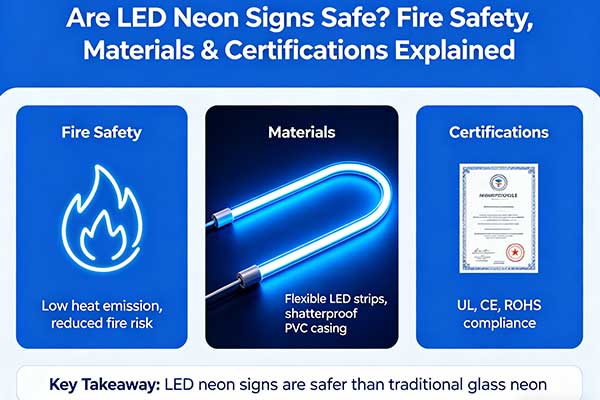
If you’re shopping for a custom neon sign, safety is probably on your mind. Can LED neon signs catch fire? Are they safe for a nursery? What certifications should you look for? These are smart questions — and the answers are reassuring. This guide covers how LED neon works, real fire risk, silicone vs PVC materials, the certifications that matter, and what to check before hanging a sign in a baby’s room. How LED Neon Signs Work (And Why They’re Different) Traditional glass neon signs use high-voltage electricity (3,000–15,000 volts) to excite gas inside fragile glass tubes. They run hot, can shatter, and require professional installation. LED neon signs — like every sign Y SIGNS produces — use a different technology: low-voltage LED strips (typically 12V or 24V DC) embedded in flexible silicone tubing, an acrylic backing board for support, and a standard wall-plug adapter (like your laptop charger). So: no high voltage, no glass, no gas, no heat. The...