
When choosing a custom neon sign, one of the most exciting decisions is color. And in 2026, you have more color options than ever. The choice often comes down to RGB neon signs vs single color—do you want one perfect color that always stays the same, or the ability to change your sign’s mood with the touch of a button?
Both options create stunning illuminated signs, but they serve different needs and budgets. Understanding the trade-offs between RGB neon signs and single-color signs helps you choose the option that matches your lifestyle, brand, and budget. If you are still deciding on your base color, our neon sign color guide provides a complete breakdown of color psychology and applications.
1. What Is a Single-Color Neon Sign?
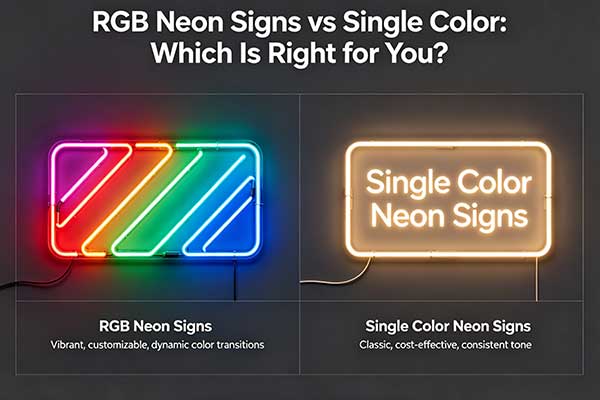
A single-color neon sign uses LED strips of one fixed color temperature or hue. You choose one color at order time—warm white, cool white, red, blue, pink, green, amber, or any other standard color—and the sign emits that color exclusively. Single-color signs are simpler, cheaper, and offer the purest, most consistent glow. The color is embedded in the LED itself, ensuring it never drifts or changes over the sign’s lifetime.
2. What Is an RGB Neon Sign?
An RGB neon sign uses red, green, and blue LEDs in combination to create millions of possible colors. A built-in controller allows you to switch between colors, set color-changing patterns, adjust brightness, and often sync to music via remote control or smartphone app. RGB neon signs offer maximum flexibility—your sign can be warm white for cozy evenings, electric blue for parties, and festive rainbow for holidays, all from the same sign.
3. Brightness and Color Quality
Single-color neon signs are typically 10-15% brighter than RGB signs in their specific color because the LED is dedicated to one wavelength. The color saturation is also deeper and more pure. RGB signs mix colors by combining multiple LEDs, which can sometimes result in slightly less pure shades—especially for white, which is a blend of red, green, and blue rather than a dedicated white LED. For true white, look for RGB+W (RGB plus dedicated white LED) signs that offer the best of both worlds.
4. Cost Comparison
RGB neon signs cost $20-50 more than equivalent single-color signs due to the additional controller, RGB LEDs, and remote. For most buyers, this premium is well worth the added flexibility. Single-color signs are the budget-friendly choice and excellent for applications where one color perfectly matches your brand or decor. Check our custom neon sign pricing guide for detailed cost comparisons.
5. Best Use Cases
Single-Color Is Best For: Permanent installations where your color choice is final. Business branding with a fixed brand color. Home decor where the sign matches an established color scheme. Budget-conscious buyers who want maximum brightness for their color. Minimalist aesthetics where color purity matters.
RGB Signs Are Best For: Event and party environments where the mood changes. Photo booth neon signs that need to match different event themes. Gaming rooms and entertainment spaces. Multi-purpose rooms used for different activities. Businesses that want to change their sign’s color seasonally or for promotions.
6. Control Options
Single-color neon signs typically have a simple on/off switch, sometimes with a dimmer. RGB signs offer far more controls: remote control for color selection and brightness, smartphone app for programmable schedules and custom colors, music-sync mode that changes color with audio input, and memory function that remembers your last setting. Some premium RGB signs offer voice control via Alexa or Google Assistant.
7. Durability and Longevity
Both single-color and RGB neon signs have the same LED lifespan of 50,000+ hours. The only potential failure point on RGB signs is the controller—but quality controllers are rated for 30,000+ hours of operation. If the controller fails, it can be replaced independently without affecting the LEDs themselves. Both types maintain their color and brightness throughout their lifespan.
Related Articles
- Neon Sign Color Guide: Warm White vs Cool White vs RGB
- Retro vs Modern Neon: 2026 Design Trends
- Ultimate Custom Neon Sign Design Guide
- Gaming Room Neon Signs: Leveling Up Your Setup
8. Frequently Asked Questions (FAQ)
Can I change the color on a single-color sign later?
No. Single-color signs are manufactured with specific LEDs. To change color, you would need a new sign. This is why RGB is better for spaces where your style may evolve.
Does RGB use more electricity?
Slightly. RGB signs use 12-24 watts for standard sizes, compared to 10-20 watts for single-color. The difference is negligible—approximately $1-3 per year in electricity costs.
Can I set my RGB sign to one color and leave it?
Yes. RGB signs remember their last color setting. You can set it to white on day one and never change it—it will function exactly like a single-color sign with the option to switch later.
Are RGB white signs as white as dedicated white signs?
RGB white (created by mixing red, green, and blue) has a slightly blue or pink tint depending on the mix. For pure white, choose RGB+W signs that include a dedicated white LED.
Both RGB and single-color neon signs deliver beautiful, long-lasting illumination. Choose single-color for the purest, brightest glow at the best price when your color choice is permanent. Choose RGB for ultimate flexibility—the ability to change your sign’s color for different moods, seasons, and occasions. For most buyers, the $20-50 premium for RGB is one of the best upgrades you can make.
7. Popular Color Combinations for RGB Neon Signs
Choosing the right color scheme for your RGB neon sign can dramatically affect the mood and effectiveness of your display. Popular combinations for home use include warm white and rose gold for a cozy romantic feel, teal and purple for a modern creative space, or cool blue and white for a clean minimalist aesthetic. Commercial spaces often favor brand-specific color combinations that reinforce corporate identity. For gaming rooms, popular RGB color cycles include cyberpunk palettes (neon pink and electric blue) or gamer-inspired combinations (crimson red and gold). Party and event spaces benefit from multi-color animated effects that cycle through a preset palette synchronized to music. The most effective RGB signs use two to three complementary colors rather than cycling through all available options, which can appear chaotic. Monochromatic schemes—varying shades of a single color—create sophisticated depth without the overstimulation of multi-color displays. Many RGB signs offer preset themes (sunset, ocean, forest, aurora) that remove the guesswork from color selection, allowing users to achieve professional-looking results with a single button press.
Looking for the perfect neon sign for your needs? Check out our link in bio – influencer cta sign, our pog – emote-style gaming sign, or our charlie dog neon sign – illuminate your love to find exactly what you’re looking for.