
“Two signs look identical — why is one $150 and the other $400?” That’s u/PickyBuyer in r/neonsigns, and it’s the exact question every first-time custom neon buyer ends up asking. The short answer: they only look identical in a product photo. On the inside — the LED density, the backing board, the power supply, the soldering — a $400 sign and a $150 sign are built in completely different leagues.
We pulled the 9 craft red flags that separate a premium neon sign from a budget import, cross-referenced with repair data and long-term owner reports from r/neonsigns, r/Entrepreneur, and r/smallbusiness. If you’re about to spend real money on a sign you’ll stare at for the next decade, this is the checklist you want before you check out.
The Top Comments
u/SignFabricator (sign manufacturer): “The cheapest way to build a neon sign is to bend the corners on LED density and backing. A buyer can’t see LED spacing in a listing photo. We run 30–40 LEDs per meter on our acrylic signs; cheap imports run 15–20 and still advertise the same brightness. It works for 3 months, then hot spots and dead zones appear.”
u/InspectorBright (quality inspector): “I bench-test imports every week. The single biggest tell isn’t the neon itself — it’s the power supply. Generic no-name adapters make up the majority of early failures. A branded, properly rated driver and clean, even solder joints are what separate a sign that lasts 10 years from one that dies in 10 months.”
u/NeonFor5Years (long-term owner): “My first sign was $120 from a marketplace. Glow looked fine day one. By month six the ‘white’ turned yellow, the letter ‘R’ flickered, and by month nine it was a paperweight. My current custom sign is 4 years old, still a uniform color, still bright. Same design, different craft. The difference is entirely inside.”
u/MainStreetOwner (small-biz buyer): “I almost bought cheap because I only compared price. Then I asked about the backing — the cheap one was thin printed plastic, the good one was 6mm acrylic that won’t warp behind a hot kitchen window. Same word, same shape, $140 vs $390. I paid the extra $250 and never regretted it.”
u/FixItTech (repair technician): “Roughly 70% of the outdoor sign failures I repair trace back to the power supply and connector, not the LED strip itself. If you buy generic, a $15 adapter failure takes your whole $400 sign down. Quality signs ship with proper drivers, strain-relieved wiring, and a warranty that actually covers it.”
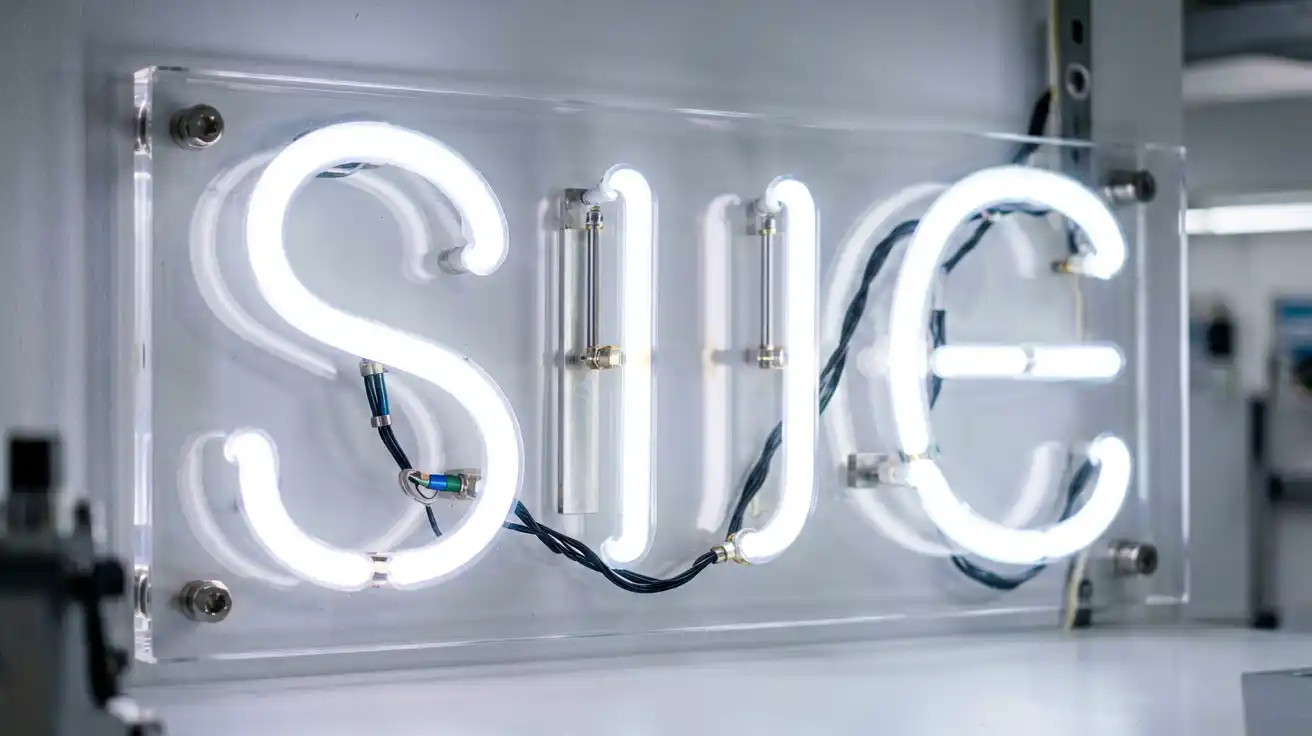
The 9 Craft Red Flags Checklist
Use this as your scoring sheet. A genuinely high-quality neon sign should pass all nine.
| # | Red Flag to Check | Premium Sign | Cheap Sign |
|---|---|---|---|
| 1 | Brightness uniformity | Even glow, no hot spots | Patchy brightness, bright dots |
| 2 | LED density per meter | 30–40 LEDs/m | 15–20 LEDs/m |
| 3 | Glow color consistency | Stable color over years | Fades or shifts (white→yellow) |
| 4 | Backing material | 6mm sturdy acrylic | Thin printed plastic |
| 5 | Power supply | Branded, correctly rated | Generic no-name adapter |
| 6 | Soldering | Clean, even joints | Cold joints, brittle |
| 7 | Acrylic face | Clear, polished surface | Cloudy, scratched |
| 8 | Certification | UL/CE certified | No compliance marks |
| 9 | Warranty & packaging | 10-year warranty, protective box | 1-year (or none), flimsy box |
Component Quality: What’s Actually Inside
The biggest hidden cost difference is LED density and brightness uniformity. Denser LED spacing means the light overlaps into one seamless, uniform glow instead of visible dots — and it’s the reason premium signs look sharper and more premium on a wall.
| Component | What Premium Looks Like | Why It Matters |
|---|---|---|
| LED density | 30–40 LEDs per meter | Uniform glow, no visible dots |
| Brightness uniformity | No hot spots at corners/joints | Consistent look at every angle |
| Power supply | Branded, correct wattage/voltage | Avoids ~70% of power/connector failures |
| Soldering | Clean, even, strain-relieved | No flicker, survives movement |
| Backing | 6mm acrylic, warp-resistant | Stays flat behind heat and moisture |
| Acrylic face | Clear polished front | Brighter, cleaner light output |
Materials, Warranty & Certification: The Trust Test
Two signs with the same shape can still differ on materials, safety certification, and how long the maker stands behind the product. These three tell you whether the seller expects the sign to last.
| Factor | Budget / Import | Quality Manufacturer |
|---|---|---|
| Backing board | Thin plastic, prone to warp | 6mm+ acrylic, warp-resistant |
| Certification | No UL/CE marks | UL/CE certified components |
| Warranty | 1-year (often unenforceable) | Up to 10-year coverage |
| Packaging | Thin box, high damage rate | Protective reinforced packaging |
| After-sales | No support, no replacement parts | Repair and replacement support |
Price-to-Quality Tiers
| Tier | Typical Price | What You Get | Best For |
|---|---|---|---|
| Budget import | $100–$200 | Low LED density, generic PSU, 1-yr warranty | Short-term decor, party use |
| Mid-range | $200–$350 | Better density, decent backing, 2–5-yr warranty | Home decor, office |
| Premium | $350+ | High LED density, acrylic, branded PSU, 10-yr warranty, certs | Business, long-term brand signs |
Key Takeaways: The 9 Red Flags Checklist
Before you buy your best quality custom neon sign, run through these:
- Uniform brightness — no hot spots or visible LED dots.
- High LED density — 30+ LEDs per meter for a seamless glow.
- Consistent color — won’t fade or shift over years.
- Sturdy acrylic backing — not thin printed plastic.
- Branded, correctly rated power supply — avoids most failures.
- Even soldering, a clear acrylic face, and UL/CE certification.
- Long warranty (10-yr beats 1-yr) and protective packaging.
Still comparing materials? Our neon vs glass guide helps you pick the right tech, and our custom design support page walks you through designing a sign built to last. When you’re ready for a sign that still glows perfectly a decade from now, start your custom neon sign today.