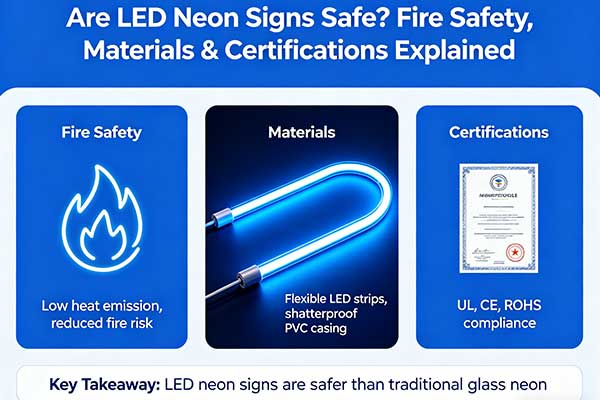
If you’re shopping for a custom neon sign, safety is probably on your mind. Can LED neon signs catch fire? Are they safe for a nursery? What certifications should you look for? These are smart questions — and the answers are reassuring. In this guide, we’ll cover everything you need to know about LED neon sign safety, from materials and heat output to the certifications that separate quality manufacturers from the rest. How LED Neon Signs Work (And Why They’re Different) Traditional glass neon signs use high-voltage electricity (3,000–15,000 volts) to excite gas inside fragile glass tubes. They run hot, can shatter, and require professional installation. LED neon signs — like every sign Y SIGNS produces — use a completely different technology: low-voltage LED strips (typically 12V or 24V DC) embedded in flexible silicone tubing, an acrylic backing board for structural support, and a standard wall plug power adapter (like your laptop charger). This means: no high voltage, no glass,...