
1. Understanding IP Ratings: IP65 vs. IP67 vs. IP68
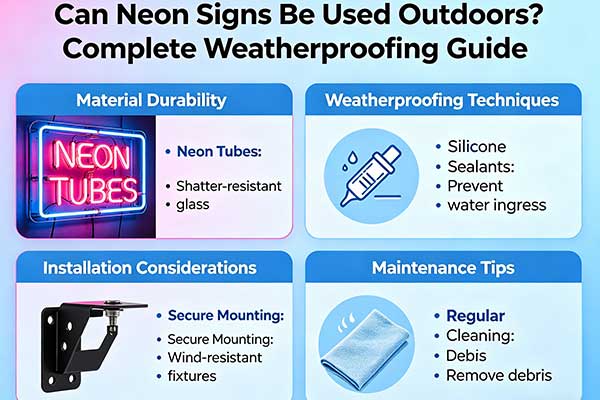
The first thing to look for in an outdoor neon sign is its Ingress Protection (IP) rating. IP65 means the sign is dust-tight and protected against low-pressure water jets from any direction — suitable for covered outdoor areas like patios, awnings, and porch overhangs. IP67 offers complete protection against temporary immersion in water up to one meter for 30 minutes — ideal for uncovered outdoor areas that experience direct rain. IP68 allows for continuous immersion beyond one meter — overkill for most residential and commercial outdoor uses but available for extreme environments. For most outdoor applications, IP67 is the sweet spot. If your sign will be under a covered roof, IP65 is sufficient and often more affordable.2. LED Neon vs. Traditional Glass: The Outdoor Verdict
For outdoor use, LED Neon Flex is the clear winner. Traditional glass neon is extremely fragile and contains gas that can leak if the glass cracks. Exposure to rain, snow, or wind-blown debris can shatter glass tubes. LED neon, by contrast, is made from solid silicone tubing that is flexible, impact-resistant, and fully sealed against moisture. The LED beads are embedded in the silicone, meaning there are no fragile gas-filled cavities. Additionally, LED neon operates at low voltage (12V to 24V), making it safer in wet conditions compared to the high-voltage transformers required by glass neon. For a detailed comparison, read our LED vs glass neon comparison guide.3. UV Resistance and Color Fading Over Time
Continuous exposure to sunlight can cause color fading and material degradation over time. Quality outdoor LED neon signs use UV-stabilized silicone that resists yellowing and brittleness. The LED beads themselves should be rated for outdoor brightness levels — typically 500 to 800 lumens for daytime visibility. Color choice also matters for outdoor longevity. Warm white and cool white tend to maintain their color best over years of sun exposure. Red, blue, and green also perform well outdoors. Pastels and lighter colors may fade faster under intense UV light. If your sign faces direct afternoon sun, choose a darker or more saturated color variant. Most quality manufacturers provide a 1 to 3 year warranty specifically covering UV degradation, so check warranty terms before purchasing and keep your receipt for any future claims.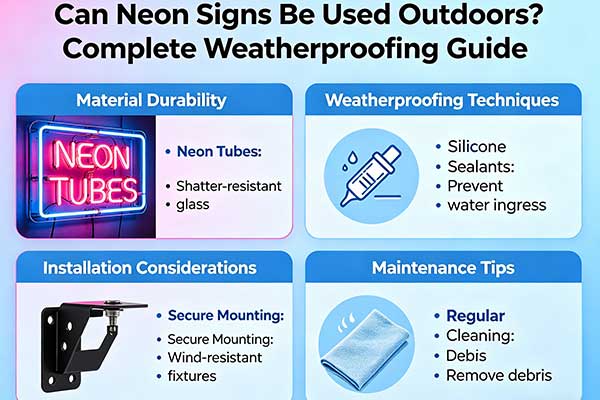
4. Outdoor Installation Best Practices
Installing an outdoor neon sign requires some precautions that indoor signs do not. Always create a “drip loop” in the power cord — a U-shaped curve below the connection point — so water runs down the cord and drips off rather than entering the sign or power adapter. Seal all connections with silicone dielectric grease or waterproof connectors. Mount the sign on a flat, clean surface using outdoor-rated adhesive strips or stainless steel brackets. Avoid placing the sign in areas where sprinklers or downspouts direct water at it directly. For detailed outdoor installation guidance, see our outdoor neon installation master guide. Regular checks after heavy storms will help you spot any issues early before they become serious problems.5. Temperature Tolerance and Climate Considerations
LED neon signs perform well across a wide temperature range, typically from -20°F to 120°F (-29°C to 49°C). In freezing climates, LED neon actually performs better than glass neon because the silicone does not become brittle. In hot climates, the low heat output of LED means the sign will not overheat even in direct sun. However, extreme cold can dim LED brightness temporarily — the sign will return to full brightness as it warms up. For coastal areas with salt spray, choose a sign with corrosion-resistant connectors and stainless steel mounting hardware. In areas with frequent thunderstorms, unplug outdoor neon signs during electrical storms as a safety precaution, even though low-voltage LED is much safer than glass neon alternatives.6. Maintenance Schedule for Outdoor Neon Signs
Outdoor neon signs require more maintenance than indoor ones due to exposure to dirt, pollen, rain spots, and bird droppings. Clean the sign monthly with a soft, damp microfiber cloth. For stubborn grime, use a mild soap solution and rinse with a gentle spray of water — avoid pressure washers. Inspect the seals and connections every three months for signs of wear. If you notice condensation inside the sign tubing, stop using it immediately and contact the manufacturer. With proper care, a quality IP67-rated outdoor LED neon sign lasts 5 to 10 years or more. For comprehensive cleaning instructions, refer to our LED neon cleaning and maintenance guide.Related Articles
- Outdoor Waterproof Christmas Neon Signs: The Ultimate 2026 Durability Guide
- How to Install Outdoor Neon Signs for the Holidays: The 2026 Master Guide
- LED vs. Glass Neon: The Ultimate 2026 Guide to Choosing the Right Glow
- How to Get the Neon Signs of Your Dreams
7. Frequently Asked Questions (FAQ)
Can I leave my neon sign outside in the rain? Yes, if the sign is IP67-rated. IP65-rated signs should be under a covered area. Never leave non-weatherproof indoor signs exposed to rain. Will the sun damage my outdoor neon sign? Quality UV-stabilized silicone resists fading for years. Choose saturated colors and look for a warranty that covers UV degradation. How cold is too cold for an outdoor neon sign? LED neon functions down to -20°F. The sign may dim slightly in extreme cold but returns to normal brightness as temperatures rise. Do outdoor neon signs use more electricity? No. Outdoor LED neon uses the same low-power 12V or 24V systems as indoor signs. Yearly running costs remain under $20.Looking for the perfect neon sign for your needs? Check out our “luminous beauty” neon sign, our fresh & local – farmhouse kitchen wall, or our make it happen neon sign – motivational light for offices to find exactly what you’re looking for.