
Whether you have a custom business logo or a vibrant piece of home decor, an LED neon sign is an investment in atmosphere. In 2026, while LED technology has become more durable than ever, its “set it and forget it” reputation can be misleading. To keep that crisp, neon-like glow and prevent premature hardware failure, a consistent maintenance routine is essential.
Proper maintenance of LED neon signs is 90% prevention and 10% gentle cleaning. Unlike traditional glass neon, which requires specialized gas refills, LED neon maintenance centers on heat management and surface integrity. By keeping the silicone housing free of dust—which acts as an insulator and traps heat—and ensuring the power adapter remains ventilated, you can extend the sign’s lifespan from the standard 50,000 hours to over 100,000 hours, ensuring your “glow” lasts for over a decade.
1. Why Maintenance Matters: The “Heat vs. Dust” Battle
While LED neon doesn’t get “hot” like glass neon, it does generate a small amount of internal heat.
-
The Insulation Effect: Dust buildup on the silicone jacket acts as a thermal blanket. If the heat cannot dissipate through the silicone, it stays trapped near the LED chips.
-
The Result: Continuous overheating leads to “dimming” or color shifting (where a vibrant pink starts to look muddy or yellowish).
Key Data: Studies on commercial LED strips show that keeping a sign dust-free can improve heat dissipation efficiency by up to 15-20%, directly correlating to a longer life for the internal circuitry.
2. The Golden Rules of Cleaning
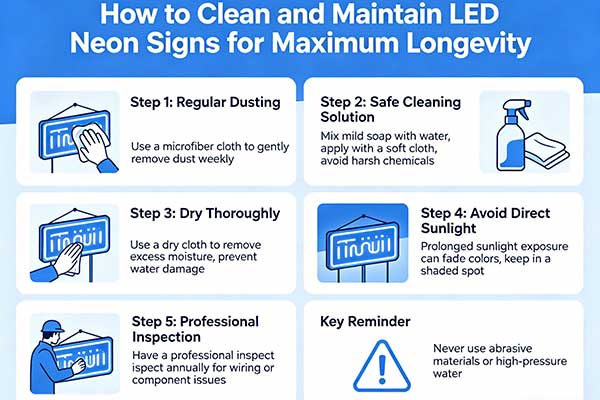
When it’s time to clean, the “less is more” approach is vital. LED neon is typically encased in silicone or PVC, which can be sensitive to harsh chemicals.
A. The “Dry First” Method
Always start with a dry microfiber cloth. Microfiber is designed to lift dust particles rather than just pushing them around. For intricate designs with small crevices, use a clean, soft-bristled makeup brush or a dedicated lens brush to flick dust out of the corners.
B. Dealing with Smudges
If you have fingerprints or “sticky” spots (common in kitchens or bars):
-
Unplug the sign: Never clean a live electrical device with moisture.
-
Damp, not wet: Use a mixture of 99% water and 1% mild dish soap. Dampen the cloth, wring it out completely, and gently wipe the silicone.
-
Dry immediately: Use a second dry cloth to remove any moisture. Streaks left to air-dry can become permanent “water spots” on the silicone surface.
Warning: Avoid ammonia-based cleaners (like standard Windex) or alcohol-based solvents. These can cause the silicone jacket to become brittle or “cloudy” over time, ruining the diffusion of the light.
3. Maintaining the “Hidden” Components
A sign is only as good as its power source. Most “neon sign failures” are actually power adapter failures.
| Component | Maintenance Action | Frequency |
| Silicone Jacket | Dust with Microfiber | Every 2-4 weeks |
| Acrylic Backing | Wipe with Anti-Static Cleaner | Every 3 months |
| Power Adapter | Ensure ventilation / Dust vents | Every 6 months |
| Connectors | Check for “loose” or “wiggling” wires | Every 6 months |
Pro Tip: If your sign is mounted in a commercial space, ensure the power “brick” isn’t buried under insulation or trapped in a tight wooden box. It needs airflow to stay cool.
4. Comparison: Maintenance Costs over 5 Years
| Feature | Traditional Glass Neon | LED Neon Flex |
| Cleaning Difficulty | High (Fragile tubes/High voltage) | Low (Shatterproof/Low voltage) |
| Repairs | Gas refills/Tube bending ($200+) | Modular segment replacement ($20-$50) |
| Average Maintenance Cost | $400 – $600 | $0 – $50 |
5. Environmental Factors: Indoors vs. Outdoors
Where you hang your sign dictates how you maintain it.
-
Indoor Signs: The biggest enemy is kitchen grease and cigarette smoke (if in a bar). These create a yellow film that is hard to remove. If your sign is in a high-grease area, wipe it down weekly to prevent buildup.
-
Outdoor Signs: These are built with IP67-rated silicone, but they face UV degradation. In 2026, many outdoor signs come with a UV-protectant coating. To maintain this, avoid abrasive scrubbing which can peel the protective layer. Check the waterproof seals around the power entry point annually to ensure no water is seeping into the jacket.
6. Troubleshooting Common Issues
If your sign starts to flicker or a section goes dark:
-
Check the Dimmer: Often, the battery in the remote is low, causing “signal noise” that makes the sign flicker.
-
Verify the Connection: Ensure the DC jack is pushed in firmly. A loose connection can cause “arcing,” which generates heat and can melt the plastic connector.
-
Inspect for Bends: If a section is dark, check if the sign has been bent too sharply. LED neon has a “minimum bend radius”—forcing it beyond this can snap the internal copper wiring.
Related Articles
For more neon sign care tips, read our guide to outdoor waterproof neon signs for durability best practices, see how LED compares to glass neon in terms of maintenance, and check our no-drill installation guide for proper setup tips.
7. Frequently Asked Questions (FAQ)
Q1: Can I use a vacuum cleaner with a brush attachment to clean my sign?
Yes, but be extremely careful. Use the lowest suction setting and a soft brush attachment. High-power vacuums can pull the silicone jacket away from the acrylic backing or tug on the delicate wiring connections.
Q2: How do I get rid of “static” that attracts dust to the acrylic?
Acrylic backings are notorious for static electricity. Use a dedicated anti-static plastic cleaner (like Brillianize or Novus) on the backing only. This creates a microscopic barrier that repels dust, keeping the sign looking “freshly cleaned” for much longer.
Q3: Is it okay to leave my sign on 24/7, or will that “burn out” the LEDs?
While LEDs are rated for long use, running them 24/7 will accelerate the dimming process. To maintain maximum brightness for years, use a smart timer to turn the sign off when the room is empty. Giving the components time to reach ambient temperature extends the life of both the LEDs and the power transformer.
7. Professional Maintenance: When to Call an Expert
While most LED neon maintenance is DIY-friendly, certain situations warrant professional service. If your sign develops intermittent flickering, sections that remain dark, or unusual discoloration, these may indicate internal wiring issues or LED driver failure rather than simple dirt buildup. Professional technicians can diagnose and repair these issues safely, often extending your sign’s life by several additional years. Signs installed in hard-to-reach locations, such as high ceilings or exterior facades, should be serviced by professionals with proper safety equipment. Annual professional inspection is recommended for commercial signs that operate 24/7, as proactive maintenance prevents unexpected failures during peak business hours. Most reputable manufacturers offer maintenance plans or referral networks for certified technicians. When budgeting for your neon sign investment, allocate approximately 10% of the purchase price annually for maintenance to ensure long-term performance and return on investment.
Looking for the perfect neon sign for your needs? Check out our think different neon sign – led creative statement light, our we are open neon sign – led storefront light, or our hello, we are open neon sign to find exactly what you’re looking for.