
When looking for reliable IP67 neon signs, understanding weatherproof ratings is crucial. When it comes to holiday curb appeal, the stakes have changed. In 2026, homeowners are moving away from traditional “blow-molds” and tangled fairy lights in favor of sleek, high-visibility neon. But the transition from the living room to the front lawn introduces a critical challenge: the elements.
For exterior holiday displays, IP67-rated LED Neon Flex is the gold standard for weatherproof LED signage that withstands extreme conditions. Unlike traditional glass neon, which is prone to cracking in freezing temperatures, or basic indoor LED signs that short-circuit in rain, waterproof LED neon offers a vacuum-sealed, UV-resistant solution. It provides 100% safety against snow and rain while maintaining a vibrant glow that remains visible even through heavy winter fog, ensuring your holiday investment survives the harshest December conditions.
1. Understanding the “Waterproof” Scale: IP65 vs. IP67
Not all “outdoor” signs are created equal. In 2026, savvy consumers look specifically at the Ingress Protection (IP) rating.
-
IP65 (Water-Resistant): Suitable for covered porches or under eaves. It can handle light splashes and humidity but may fail during a heavy driving rainstorm or if buried in a snowbank.
-
IP67 (Waterproof): The recommended tier for Christmas. These signs feature a fully encapsulated silicone jacket and waterproof connectors. They can technically be submerged in water for short periods, making them immune to melting snow and torrential winter rain.
Key Data: Statistics from 2025 insurance claims for “holiday electrical fires” showed that 82% of incidents involved indoor-rated lights being used in outdoor environments. Upgrading to IP67-rated neon virtually eliminates this risk.
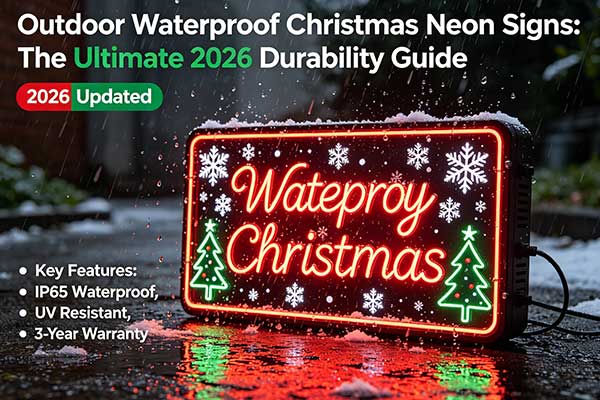
2. LED Neon vs. The Winter Elements
Traditional glass neon and cheap plastic lights often fail when the temperature drops. Here is how specialized Outdoor LED Neon Flex handles the “Big Three” winter threats:
| Winter Threat | Traditional Glass/Plastic | Outdoor LED Neon Flex |
| Freezing Temps | Glass becomes brittle; gas pressure drops | Flexible silicone remains pliable to $-40^{circ}C$ |
| Heavy Snow Load | Bulbs snap under weight | High-tensile silicone resists crushing |
| UV Exposure | Plastic turns yellow and cracks | UV-stabilized coating prevents discoloration |
Technical Note: Modern 2026 outdoor neon uses low-voltage 24V systems, which are more stable over long distances (like rooflines) and safer for wet environments than older 110V string lights.
3. Commercial-Grade Aesthetics for Homeowners
The primary reason for the 2026 “Neon Outdoor Trend” is the visual clarity.
-
The “Fog Cut” Factor: Traditional LEDs often look like blurry dots in a snowstorm. Because neon flex is a continuous line of light, it maintains its shape and legibility even in low-visibility winter weather.
-
Structural Accents: Homeowners are now using waterproof neon “strips” to outline the architectural bones of their houses—windows, gables, and pillars—creating a “TRON-meets-Christmas” look that is far cleaner than sagging string lights.
4. Installation Essentials: Power & Mounting
A waterproof sign is only as safe as its installation. To maintain ROI, follow these 2026 “Best Practices”:
-
Waterproof Power Bricks: Ensure your transformer is either kept in a dry box or is itself IP67 rated. The “plug” is the most common point of failure.
-
Stainless Steel Clips: Avoid using tape or cheap plastic hooks. Outdoor neon should be mounted with stainless steel or UV-treated polycarbonate clips that won’t degrade in the sun or rust in the rain.
-
Drip Loops: Always create a “drip loop” in your power cable. This ensures that rainwater trickling down the wire falls off before it reaches the electrical outlet.
5. The Long-Term ROI of Weatherproofing
While an outdoor-rated neon sign may cost 20-30% more upfront than an indoor version, the Return on Investment is found in its longevity.
-
Year 1: High-impact display, zero weather-related outages.
-
Year 3: Colors remain vivid; no “yellowing” of the silicone.
-
Year 5: The sign has outlasted approximately three sets of traditional “cheap” holiday string lights, which typically fail due to wire corrosion or bulb pops.
Recommended Resources
For step-by-step installation guidance, see our outdoor neon installation master guide. Discover the latest Christmas neon sign trends for 2026 and learn about the benefits of silicone-based LED neon for durability. For a complete comparison, check our LED vs glass neon analysis.
6. Frequently Asked Questions
Q1: Can I leave my outdoor neon sign up all year?
Technically, yes—if it is UV-stabilized. High-quality 2026 outdoor neon is designed to withstand summer heat as well as winter cold. However, for maximum lifespan (reaching that 100,000-hour mark), most experts suggest taking it down after the holidays to avoid unnecessary exposure to the elements during the off-season.
Q2: Will the colors fade if the sign is covered in snow?
No. In fact, snow can act as a beautiful natural diffuser, amplifying the glow. Because LED neon produces very little heat, it won’t melt the snow fast enough to cause “ice damming” on your sign, and the color is baked into the silicone jacket, meaning it won’t “wash away.”
Q3: Is it safe to plug an outdoor neon sign into a standard garage outlet?
It is safe provided you use a GFCI (Ground Fault Circuit Interrupter) outlet, which is standard in most 2026 homes. For the best safety, ensure the connection point is housed inside a weather-protected “In-Use” cover to keep the plug dry during a storm.
7. Installation Tips for Maximum Durability
Proper installation is critical to ensuring your outdoor Christmas neon sign survives winter weather conditions. Mount the sign under an eave or awning when possible to reduce direct rain and snow exposure while maintaining visibility. Use stainless steel mounting brackets and ensure all electrical connections are protected with waterproof connectors and dielectric grease. Position the sign at a slight downward angle so water runs off rather than pooling on the surface. For ground-level installations, elevate the sign at least 6 inches above the ground to prevent contact with snow accumulation. Cable manage all power cords neatly and use outdoor-rated extension cords with weatherproof covers. Before permanent mounting, run the sign for 24 hours to verify all LEDs function correctly and the power supply operates without overheating. Test your sign’s visibility from the street at night before finalizing placement—you may need to adjust height or angle to achieve the best visual impact for passing traffic.
Looking for the perfect neon sign for your needs? Check out our on air – podcast recording sign for podcasters & radio hosts, our made with love – baking & cooking station, or our selfie station neon sign – led social media backdrop to find exactly what you’re looking for.