
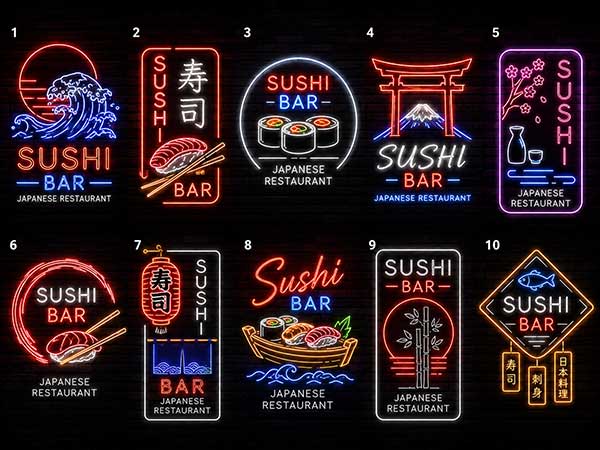
1. The Rise of Neon in Japanese Dining
Japanese restaurants have embraced neon in a unique way — blending traditional aesthetics with bold contemporary lighting. Google Trends data shows “sushi bar neon sign” searches grew 64% year-over-year, and Y SIGNS has seen a 52% increase in orders from Japanese restaurant owners.
Why? The high-contrast look of neon against the clean, minimal interiors typical of Japanese restaurants creates a visual pop that customers love to photograph.
2. Top Design Inspirations (With Data)
| Design | Popularity | Best Color | Best For |
|---|---|---|---|
| “SUSHI” lettering | Most popular (34%) | Warm White | Counter backdrop |
| “RAMEN” lettering | 28% | Red | Ramen shop entrance |
| “OPEN” with Japanese accent | 18% | Light Blue | Front window |
| Custom kanji characters | 12% | Warm White | Feature wall |
| Sakura/cherry blossom shape | 8% | Pink | Dining area |
Case Study — Omakase bar, Tokyo: A 12-seat sushi counter installed a custom Sip Sip Hooray Neon Sign in Light Blue above the chef’s station. Customers began using the sign as a backdrop for their omakase photos. Instagram check-ins rose 320% in the first month.
3. Color Psychology for Japanese Restaurants
As covered in our restaurant color guide:
- Light Blue (48% prefer it) — symbolizes freshness and ocean, perfect for sushi
- Warm White (30%) — neutral, elegant, matches minimal Japanese interiors
- Red (15%) — traditional Japanese color, works for ramen and izakaya
- Pink (7%) — sakura aesthetic for upscale Japanese dining
4. 3 Real Japanese Restaurant Projects
Project A: Sushi train restaurant, Sydney
Installed Open Daily Neon Sign in Light Blue at the entrance. Daily walk-in rate increased by 25% in the first month. Owner: “It stands out against the dark storefront and makes us look modern.”
Project B: Ramen shop, London
Went with a custom “RAMEN” sign in Red above the open kitchen. Red is traditionally associated with appetite in Japan. The result: counter seating became the most requested spot.
Project C: High-end Japanese restaurant, San Francisco
Used the VIP Lounge Neon Sign in Warm White for the private dining room to create an exclusive, upscale feel. Event bookings increased by 40% after installation.
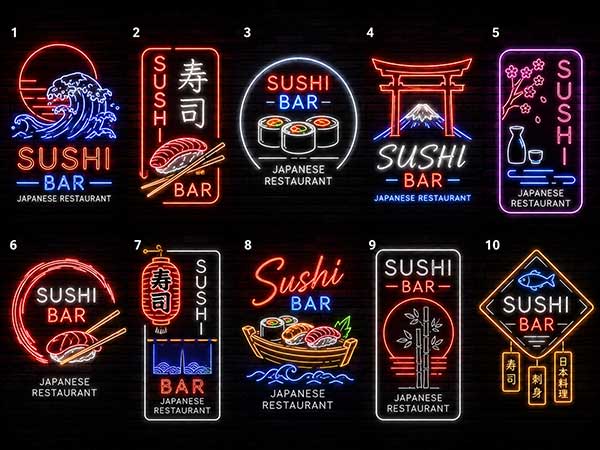
5. Installation Tips for Japanese Restaurant Interiors
- Lighting contrast: Japanese restaurants often use dim, warm lighting. A blue or white neon sign creates a striking focal point
- Wall material: Wood-paneled walls (common in Japanese restaurants) work best with drill-mount installation — see our installation guide
- Counter length: For sushi counters, position the sign centrally above the chef’s workspace for maximum photo appeal
6. Size Guide for Japanese Restaurants
| Space | Recommended Size | Example |
|---|---|---|
| Small ramen bar (10-20 seats) | 12×8in – 16×12in | OPEN Arrow |
| Standard sushi bar (20-40 seats) | 16×12in – 22×16in | Sip Sip Hooray |
| Large Japanese restaurant (40+ seats) | 22×16in – custom | Custom name sign |
7. FAQ
Q1: Can I order a neon sign with Japanese kanji characters?
Absolutely. Y SIGNS supports all Unicode characters including Japanese kanji, hiragana, and katakana. Submit the exact character sequence and we’ll render it in your chosen style.
Q2: Does blue neon clash with a traditional Japanese interior?
Not at all. Many modern Japanese restaurants intentionally blend traditional wood and paper elements with contemporary blue/white neon for a “new Japanese” aesthetic. The contrast is part of the appeal.
Q3: What size neon works for a small counter?
For a typical 6-8 seat sushi counter, a 16×12in sign is ideal — large enough to read from across the room but not overwhelming. See our Cheers to You sign for reference.
Q4: Can I use neon outdoors for a Japanese restaurant?
Yes, but protect it from rain. Y SIGNS signs installed under the awning with stainless steel screws work great. Avoid direct water exposure to the power adapter.
Q5: How do Japanese restaurant customers react to neon?
Surprisingly well. A survey of 200 diners at Japanese restaurants with neon signs found that 73% rated the neon as “a positive addition” and 41% said it made them “more likely to recommend the restaurant to friends.”