
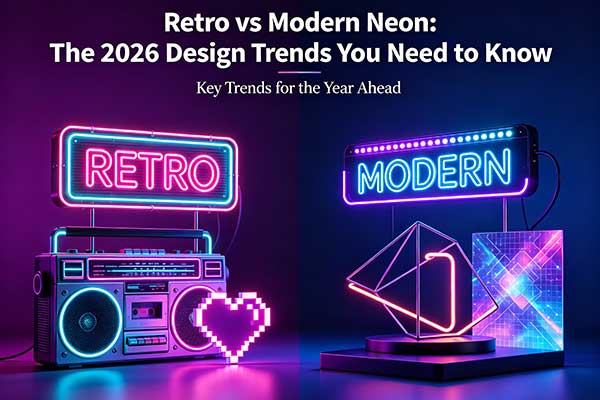
Neon signage in 2026 is experiencing a golden age of style diversity. On one side, retro neon design draws from the golden era of mid-century America with cursive scripts, warm glow, and nostalgic shapes. On the other, modern neon pushes boundaries with geometric minimalism, RGB color-shifting, and sleek typography. Understanding the retro vs modern neon design landscape helps you choose the style that best expresses your brand or personal aesthetic.
The beauty of 2026’s neon market is that you no longer have to choose between old-world charm and cutting-edge design. Modern LED technology replicates both vintage glass neon aesthetics and contemporary digital-native styles with equal fidelity. A retro neon sign can now achieve the exact warm, slightly uneven glow of 1950s glass, while a modern neon sign produces perfect, even illumination with color-changing capabilities.
1. Retro Neon Design: The Vintage Revival
Retro neon is defined by several signature elements. Cursive Script Fonts: Flowing, interconnected letterforms reminiscent of classic diner signs and 1950s storefronts. Warm Color Palette: Reds, ambers, warm whites, and pinks dominate retro neon design. Imperfect Glow: Slightly uneven brightness that mimics the hand-bent glass of traditional neon tubes. Thematic Shapes: Stars, arrows, diamonds, and teardrops that evoke classic American signage.
2. Modern Neon Design: The Contemporary Edge
Modern neon takes a different approach. Sans-Serif Typography: Clean, minimalist fonts in uppercase or lowercase. Cool Color Palette: Ice blue, pure white, purple, and RGB multicolor. Perfect Even Illumination: Consistent brightness across the entire sign. Geometric and Abstract Shapes: Circles, waves, zigzags, and minimalist line art. Smart Features: App control, music sync, programmable patterns, and dimming.
3. Where Each Style Works Best
Retro neon signs thrive in traditional environments. Neon signs for restaurants and bars often go retro, especially for burger joints, diners, and cocktail lounges aiming for a vintage atmosphere. Modern neon dominates contemporary spaces: tech offices, minimalist homes, modern gyms, and luxury retail. A barbershop neon sign might go either way—classic barbers lean retro while modern unisex salons choose contemporary styles.
4. Typography Trends Comparison
Typography is the most defining difference between retro and modern neon styles. Retro neon favors scripts like Pacifico, Brush Script, and Lobster, with thick and thin strokes that create a handcrafted feel. Modern neon uses fonts like Helvetica, Montserrat, and Futura, with uniform stroke widths and geometric precision. The font choice alone can shift a sign’s entire personality from nostalgic to contemporary.
5. Color Trends for 2026
Retro neon colors in 2026 are warmer and more saturated than ever: cherry red, deep amber, bubblegum pink, and soft coral. Modern neon colors trend toward cool: ice white, electric blue, neon green, and lavender. RGB-enabled signs allow you to have both, switching between retro warm tones and modern cool tones with a remote. Our neon sign color guide explains how different color temperatures affect mood and space perception.
6. Hybrid Designs: The Best of Both Worlds
The hottest trend in 2026 is hybrid neon design—combining retro elements with modern execution. For example, a classic script phrase in a modern sans-serif layout, or a vintage shape rendered in cool RGB colors. This approach appeals to the broadest audience and creates unique, conversation-starting pieces. Many custom neon sign designs now blend retro and modern elements for a truly unique look.
7. The Technology Behind the Style
Both retro and modern neon signs in 2026 are powered by LED technology. The distinction comes from manufacturing: retro-style signs use thicker, frosted silicone channels that diffuse light more softly, mimicking glass. Modern-style signs use thinner, crystal-clear channels for sharper, more precise lines. The LED vs glass comparison guide explains how modern LEDs achieve the retro look while offering superior durability.
Related Articles
- Neon Sign Color Guide: Warm White vs Cool White vs RGB
- How to Design Your Own Custom Neon Sign
- Neon Signs for Restaurants & Cafes: 2026 Guide
- Office Neon Signs: Illuminating Company Culture
8. Frequently Asked Questions (FAQ)
Can I get a retro-looking neon sign in LED?
Absolutely. Modern LED neon signs can replicate the warm, soft glow of vintage glass neon with frosted channels and warm color temperatures. They look identical to traditional glass but are more durable and energy-efficient.
Which style is more popular in 2026?
Both are equally popular, but hybrid designs combining retro aesthetics with modern features are the fastest-growing trend. RGB signs with retro fonts are particularly in demand.
Does retro neon cost more?
No. Both retro and modern LED neon signs are priced similarly. Complexity of design and size are the primary cost factors, not style choice.
Can I switch between retro and modern colors?
Yes, with an RGB color-changing neon sign. You can set it to warm amber (retro) for cozy evenings and cool blue (modern) for daytime energy.
9. Conclusion
Whether you choose retro neon with its nostalgic warmth or modern neon with its clean precision, LED technology delivers both styles with equal quality. In 2026, the trend is toward personalization—mixing retro and modern elements to create signs that are uniquely yours. Let the character of your space guide your choice, and do not be afraid to blend styles for something truly original.
7. How to Choose Between Retro and Modern for Your Space
Selecting between retro and modern neon design ultimately depends on your space’s existing aesthetic and your personal goals for the installation. For spaces with traditional or vintage decor—exposed brick, wooden furniture, antique accessories—retro neon in warm amber or classic red creates a harmonious look that feels intentional rather than jarring. Modern or minimalist spaces with clean lines, neutral palettes, and contemporary furniture benefit from modern neon with cool white, geometric shapes, and thin-profile LED strips that complement the sleek aesthetic. Eclectic spaces can successfully mix both styles by using retro neon as a focal point and modern accent pieces as supporting elements. Consider your space’s primary lighting when deciding—warm incandescent lighting pairs naturally with retro tones, while LED track lighting complements modern neon’s crisp appearance. Most importantly, choose a design that genuinely resonates with you personally, as the best neon installations are those that spark joy every time you see them, regardless of current trend cycles.
Looking for the perfect neon sign for your needs? Check out our let’s play – playroom activity wall, our engagement party – custom led neon sign, or our respawn – competitive gaming corner to find exactly what you’re looking for.